
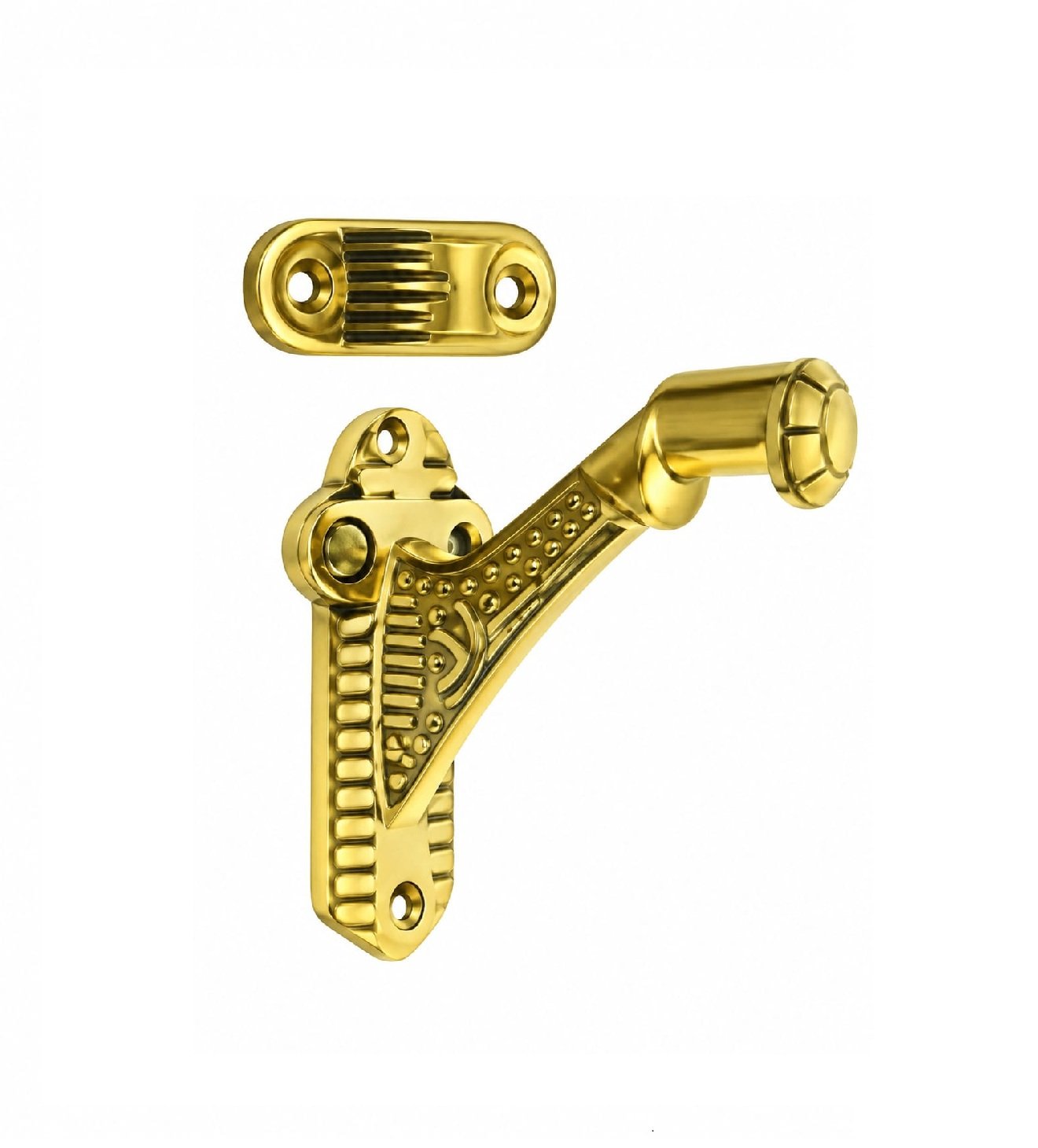
Description
A beautiful staircase is created through careful attention to every detail. From the handrail and balusters to the smallest decorative fittings, each component contributes to the character of a home or commercial interior. Bannister rail brackets are among the essential fittings that connect these design elements with the practical requirements of a handrail installation.
At Brass Hardware India, we offer architectural hardware sourcing for customers seeking functional and decorative metal fittings. Our brass hardware range is intended for buyers who value traditional craftsmanship, considered design and dependable product specifications.
Whether you are planning a residential staircase, renovating a heritage property or sourcing architectural hardware for a commercial project, choosing the right brass brackets for staircases and banisters is an important step.
Brass handrail brackets can complement natural timber, painted wood and compatible metal railings. Their warm metallic appearance is particularly attractive in classic interiors, while simple brass-finished designs can also suit modern architectural spaces.
We welcome product enquiries from importers, wholesalers, retailers, building contractors, architects and project buyers worldwide. Share your bracket design, material, finish, dimensions and required quantity to discuss suitable product options.
Brass Bannister Rail Brackets for Staircases and Banisters
Brass bannister rail brackets are architectural fittings used to support handrails along stairways, corridors, landings and other suitable locations.
In a typical wall-mounted arrangement, each bracket connects the underside or side of a compatible handrail to a supporting wall. The exact fitting method depends on the bracket design and the type of handrail.
The visible bracket may appear small compared with the staircase, but it has a significant effect on both appearance and functionality.
A traditional timber staircase with a polished brass handrail bracket creates a different impression from the same staircase fitted with a modern black support. Similarly, a satin-finished bracket can provide a more understated look than a highly polished decorative design.
For architectural projects, banister fittings should be selected as part of the complete staircase design rather than as an afterthought.
Why Choose Brass Handrail Brackets?
Brass is a familiar material in traditional architectural hardware because of its distinctive colour, workability and decorative versatility.
It can be used to produce hardware with elegant curves, shaped mounting plates and clean contemporary profiles.
Brass brackets may offer several design benefits:
- A warm metallic appearance that complements timber staircases.
- A choice of traditional or contemporary styling, depending on the design.
- Compatibility with coordinated architectural brass hardware.
- The possibility of polished, satin, antique or other specified appearances.
- A distinctive decorative detail for residential and commercial interiors.
- Material characteristics that can be suitable for particular environments when the complete specification is appropriate.
Not all brass-coloured brackets are made from solid brass. Some hardware uses a brass finish applied to another metal.
Before buying, confirm whether the product is made from solid brass, brass-plated metal or another specified construction.
This distinction matters for material selection, maintenance, appearance and long-term performance.
What Are Brass Handrail Brackets and How Do They Work?
A handrail bracket is a supporting fitting that connects a handrail to an appropriate wall or structural member.
Although bracket designs vary, a common arrangement contains three main elements.
Wall mounting plate: The section positioned against the supporting wall. It may contain visible fixing holes or a concealed attachment arrangement.
Support arm: The part projecting outward from the wall plate toward the handrail. Its geometry helps establish the rail’s distance from the wall.
Handrail saddle or connection point: The part that contacts or attaches to the rail. Depending on the product, it may be flat, curved or designed for a particular connection system.
Together, these components transfer forces from the handrail into the supporting structure.
The bracket’s material alone does not establish the capacity of the complete installation. The rail connection, bracket design, anchors, mounting substrate and applicable loading requirements must also be considered.
For this reason, buyers should request technical specifications for hardware intended to support functional handrails.
Decorative railing hangers or general-purpose supports should not automatically be treated as suitable safety handrail brackets.
Types of Brass Stair Rail Brackets
There are several styles of stair rail brackets used in architectural and decorative hardware.
Choosing the correct design involves balancing visual appearance with rail compatibility, mounting geometry and the intended environment.
Traditional Brass Bannister Brackets
Traditional brackets often feature curved supporting arms, rounded wall plates and decorative profiles.
They are frequently associated with wooden staircases, period interiors and heritage-style architectural hardware.
A polished brass bracket can create a warm contrast against dark timber. An antique-style finish may better suit aged wood, painted panelling or restoration projects.
When replacing brackets in an older property, check existing mounting positions and the profile of the handrail. A visually similar replacement may still have different dimensions.
Traditional bannister brackets should be selected using actual measurements rather than appearance alone.
Straight Handrail Brackets
Straight handrail brackets are commonly associated with a more minimal architectural appearance.
They may use a simple arm and a restrained wall plate with fewer decorative elements.
This approach can work well with contemporary interiors, clean wooden handrails and other understated metal fittings.
However, the word straight usually describes the bracket’s appearance or support geometry. It does not confirm compatibility with every staircase angle.
The actual saddle and mounting arrangement must suit the handrail.
Decorative Brass Wall Brackets
Decorative wall-mounted brackets can form part of a coordinated interior hardware scheme.
Design elements may include shaped plates, exposed fasteners, traditional curves or particular surface textures.
For hotels, residential developments and restoration projects, matching the handrail hardware to door handles or other fittings can create a more consistent appearance.
If a close finish match is required, request a physical finish reference or approved sample before placing a bulk order.
Modern Brass Handrail Supports
Modern handrail supports often prioritise clean shapes and a visually simple connection between the rail and wall.
A brushed or satin brass appearance can complement neutral wall colours, contemporary timber finishes and modern interior architecture.
Some modern brackets are designed for specific flat-bottomed handrails, while other designs may accommodate curved profiles.
The visual style should never be used as proof of mechanical compatibility.
Adjustable and Angled Brackets
Certain handrail bracket systems include adjustable components intended to accommodate a particular range of rail angles or installation conditions.
Other brackets have fixed geometry and must be matched to the staircase.
For angled installations, confirm the permitted rail angle and the design of the saddle or connector.
Do not assume every brass bracket can be adjusted during installation.
Brass Handrail Bracket Materials and Finishes
The finish of a handrail bracket influences its appearance, maintenance requirements and suitability for the intended location.
Buyers should distinguish between the metal used to make a bracket and the appearance of its surface.
A brass-coloured bracket might be solid brass or another metal with a brass-coloured finish.
Polished Brass Appearance
Polished brass is associated with traditional hardware and a bright golden appearance.
It can complement polished timber, traditional doors and other decorative metal fittings.
Uncoated brass may develop a patina as the surface changes through exposure and handling.
Lacquered brass can behave differently, depending on the coating.
Buyers who require a lasting polished appearance should confirm the finish construction and recommended maintenance procedure.
Antique Brass Appearance
Antique-style brass finishes are often selected for traditional staircases and restoration interiors.
Their darker or aged appearance can coordinate with older timber and period-style fittings.
The term antique brass describes a visual finish and does not by itself confirm the underlying metal or the ageing process used.
When ordering multiple fittings, request a finish reference to help achieve a consistent result.
Satin or Brushed Brass Appearance
Satin or brushed finishes can produce a softer, less reflective appearance than polished brass.
They are often considered for contemporary architecture where designers want the warmth of brass without a mirror-like surface.
Surface texture, colour and protective coatings can vary between manufacturers.
The appearance should be checked against the actual sample rather than assumed from a finish name.
Brass Compared with Stainless Steel Banister Brackets
Both brass and stainless steel can be used for architectural handrail hardware, but they are not interchangeable in every application.
Brass is frequently chosen for a warm decorative appearance, while stainless steel is often associated with contemporary railing systems.
The choice should also consider the material grade, corrosion exposure, fitting design, required performance and maintenance arrangements.
Stainless steel banister brackets may be appropriate for certain wet or exterior environments when the correct grade and construction are specified.
Brass may also be suitable in selected environments, but the overall bracket and fixing system must be evaluated.
No metal should be selected solely on the assumption that it is completely maintenance-free or corrosion-proof.
Brass Brackets for Wooden and Metal Handrails
A suitable handrail bracket must match the rail’s shape and material.
A beautifully finished brass bracket cannot provide the intended installation if the saddle or rail connection is incompatible.
Brass Brackets for Wooden Handrails
Wooden bannister rails are commonly found in houses, hotels, stairwell renovations and traditional architectural interiors.
They may be round, oval, rectangular or shaped with a decorative profile.
Flat-bottomed wooden handrails can use appropriately designed brackets with compatible flat saddles.
Rounded wooden handrails may require a shaped supporting surface or a different approved attachment arrangement.
When selecting brackets for a timber rail, consider its cross-section, available fixing area and material thickness.
The attachment screws and mounting locations must suit the rail construction.
For example, a slender decorative timber rail may not provide the same fixing conditions as a larger solid timber profile.
Providing a dimensioned drawing or clear cross-section can help identify compatible hardware.
Brass Brackets for Round Metal Handrails
Round metal handrails require attention to the diameter and the rail-to-bracket connection.
Some fittings use curved saddles designed for a particular tube outside diameter.
Other systems rely on separate connectors or specially designed mounting points.
A flat saddle should not automatically be assumed suitable for a round metal handrail.
For hollow tube installations, the tube wall thickness and connection method may also be relevant.
Buyers should confirm whether the bracket is intended for a wooden rail, a metal tube or both.
Choosing Compatible Handrail Fixings
The term handrail fixings includes the components used to connect the bracket to the wall and the handrail to the bracket.
Depending on the system, these may include screws, anchors, connection bolts, covers or other fitting components.
The correct combination depends on the bracket, rail and supporting structure.
Before ordering, check whether the required fixing components are included or must be purchased separately.
This is particularly important for contractors handling multiple staircase installations or overseas buyers arranging complete project deliveries.
Indoor and Exterior Brass Handrail Brackets
Indoor and outdoor handrail applications create different technical requirements.
Interior Staircase Applications
Brass stair handrail brackets may complement interior staircases in houses, apartments, hotels and commercial properties.
For these installations, appearance is often considered alongside wall clearance, handrail comfort and maintenance.
The bracket should be positioned as part of a properly designed handrail system.
Even when the environment is dry, suitable structural anchorage and rail connections remain essential.
Exterior Handrail Brackets
Outdoor staircases, entrance steps and exposed walkways may require brackets designed for changing weather conditions.
External handrail brackets can encounter moisture, dirt, atmospheric pollution and, in coastal areas, airborne salts.
These conditions may affect the brass surface, protective coating and fixing components.
A brass appearance does not automatically mean a product is suitable for outdoor installation.
Before ordering exterior handrail brackets, confirm the actual bracket material, finish specification, approved environment and compatible fixing hardware.
Special attention may be needed where dissimilar metals contact each other in damp conditions.
For exposed or coastal installations, the complete handrail system should be assessed according to the project’s requirements.
How to Select the Right Stair Banister Fixings
Choosing stair banister fixings is easier when the project information is prepared before the purchase enquiry.
The following steps help buyers create a clearer product specification.
Step 1: Identify the Handrail Material and Profile
Record whether the handrail is made of timber, brass, stainless steel, aluminium or another material.
Then identify the rail’s shape.
For round rails, the outside diameter is particularly important.
For wooden rails, the cross-section and underside profile help determine the appropriate support.
Step 2: Check the Wall Construction
The supporting surface may be masonry, reinforced concrete, structural timber or another wall system.
Different materials require different anchoring arrangements.
A decorative wall covering does not necessarily provide the structural support required for a handrail.
Bracket fixings should be specified according to the underlying load-bearing construction.
Step 3: Confirm the Bracket Projection
Wall projection affects the installed position of the handrail.
Buyers should check whether a product drawing measures projection to the rail centreline, the saddle or another reference point.
This avoids confusion when comparing different bracket designs.
The required hand clearance must comply with the relevant project requirements.
Step 4: Choose the Bracket Finish
The selected finish should coordinate with the intended interior or exterior design.
For traditional staircases, polished or antique-style brass may be considered.
For contemporary projects, simpler brushed or satin designs may be preferred.
Confirm the exact finish through product information or a sample where required.
Step 5: Establish the Required Number of Brackets
Bracket quantity depends on several factors, including handrail length, rail material, support design, bracket capacity, mounting substrate and anticipated loads.
There is no single bracket spacing that is suitable for every staircase.
Support placement should follow the requirements of the particular handrail system and applicable building standards.
Step 6: Prepare a Complete Product Enquiry
Before requesting prices or production information, prepare a clear list of requirements.
Include drawings, bracket dimensions, finish preferences, handrail profile, required quantity and intended application.
This can reduce uncertainty when discussing an architectural hardware order.
Wall-Mounted Handrail Brackets: Installation Considerations
Wall-mounted railing brackets are only one part of a handrail’s support arrangement.
For an installation to be appropriate, the bracket, anchors, rail connection and supporting structure must work together.
Supporting Wall and Anchors
A wall bracket handrail connection must be anchored into suitable structural material.
Drywall, plaster or other surface finishes should not be treated as structural support unless the complete wall system has an approved fixing arrangement.
The correct type and placement of anchors depend on the substrate and bracket design.
Some products are supplied with their own specified mounting components, while others require separate anchor selection.
Follow the relevant product instructions and project engineering requirements.
Handrail Alignment and Clearance
The rail should follow the intended staircase or walkway alignment.
Its position must allow appropriate hand clearance and meet applicable local building requirements.
The bracket design should not create an unsuitable obstruction to the gripping surface.
Changes in direction, handrail joints and angled sections may require additional design consideration.
Mounting Wooden and Metal Rails
Wooden handrails and hollow metal rails have different attachment characteristics.
A connection suitable for solid timber cannot automatically be transferred to a metal tube.
The correct mounting system must suit the specific rail and bracket design.
Where professional installation or design approval is required, it should be arranged before the handrail is used.
Inspection and Maintenance
Even attractive, well-selected fittings may require inspection during the life of a building.
Owners and maintenance teams should follow manufacturer guidance and check for unexpected movement, deterioration or corrosion.
Any concerns about a safety handrail’s stability should be assessed by a qualified professional.
Common Mistakes When Buying Brass Banister Fittings
Selecting the wrong bracket can cause avoidable problems during installation.
One common mistake is choosing a fitting entirely by its appearance.
A traditional curved bracket may look ideal for a staircase but still have the wrong wall projection or saddle geometry.
Another mistake is assuming all brass-coloured hardware is solid brass. Material composition should be confirmed before ordering.
Buyers may also overlook the difference between an interior decorative finish and an exterior-rated fitting.
A bracket intended for a protected indoor staircase may not be appropriate for an exposed outdoor installation.
Incorrect assumptions about fixing accessories can create further difficulties.
A quoted bracket may or may not include rail screws, wall anchors or decorative covers.
Always check the supplied components.
Finally, the absence of a technical drawing can lead to dimensional misunderstandings, especially for international orders.
Product names alone do not establish the exact size of a bracket.
A clear specification is one of the simplest ways to reduce purchasing mistakes.
Applications for Brass Bannister Rail Brackets
Brass handrail hardware can be considered for many different architectural settings, provided the chosen products meet the applicable requirements.
Residential Staircases
In houses and apartments, brass brackets can provide a decorative connection between wooden handrails and interior walls.
They may be selected for classic interiors, traditional timber staircases or modern rooms that use warm metal accents.
Hotels and Hospitality Interiors
Hotels, restaurants and other hospitality properties often require coordinated architectural finishes.
Brass fittings can contribute to a consistent interior appearance where they are compatible with the design and performance requirements.
Heritage Restoration Projects
Restoration work may call for hardware with traditional profiles or aged-looking finishes.
When replacing existing brackets, measure the original installation carefully.
Older wall positions and rail dimensions may not match current products.
Commercial Staircases and Corridors
Commercial projects may require handrails in areas with frequent use.
For these applications, the complete handrail system should be specified to suit the expected loads, installation conditions and applicable regulations.
Architectural Renovation Projects
Contractors and interior designers may use brass railing hardware to complement other decorative metal fittings.
A consistent finish across handles, rail supports and other architectural details can help create a more unified design.
International Building Projects
Buyers in Asia, South Africa, the United States and other regions may work with different construction practices, dimensional conventions and regulatory requirements.
For international orders, drawings and accurate measurements are especially useful.
Project-specific compliance requirements should always be confirmed locally.
Bulk Brass Handrail Brackets for Importers and Project Buyers
Brass Hardware India serves buyers sourcing architectural and decorative hardware from India.
Our website presents products for importers, wholesalers, retailers, designers, builders and other commercial customers.
For brass brackets for staircases and banisters, a clear product enquiry helps establish the design and commercial details required for further discussion.
International buyers may require consistent finish references, specified dimensions, packing details and repeat-order product identification.
For larger projects, approved technical drawings and samples can help align expectations before an order is finalised.
What to Include in a Bulk Enquiry
A useful enquiry should include:
- Product design: A bracket photograph, reference number or drawing.
- Material: The required metal and construction.
- Surface finish: Polished, antique, satin or another specified appearance.
- Dimensions: Wall plate, projection, saddle and fixing-hole measurements.
- Handrail compatibility: Rail shape, width or outside diameter.
- Application: Interior, exterior, residential or commercial.
- Quantity: Required units and any anticipated repeat orders.
- Destination: Country and receiving location.
- Project documentation: Drawings, performance requirements or approved samples.
When requesting a quotation, confirm the actual available material, finishes, minimum order quantity, delivery terms and product documentation.
Do not assume that every finish or bracket design is available for every model.
Why Contact Brass Hardware India for Architectural Hardware?
Brass Hardware India is based in Aligarh, Uttar Pradesh, India, and presents itself as a manufacturer and exporter of architectural builder’s hardware, decorative fittings and related metal products.
Our broader catalogue includes railing hardware, brass accessories, door furniture, ironmongery and other architectural hardware categories.
We work with enquiries from buyers seeking hardware for different residential and commercial applications.
For a staircase project, the important considerations include the bracket design, material, handrail compatibility, mounting requirements and finish.
We welcome clear technical enquiries so that relevant product information and quotation details can be discussed.
Buyers sourcing for international projects should also identify applicable local requirements and request supporting product information where needed.
Our goal is to help customers communicate their hardware requirements clearly, from the first product enquiry through commercial discussions.
Request a Quotation for Brass Bannister Rail Brackets
Whether your project calls for traditional decorative supports or modern brass-style handrail fittings, the right product begins with accurate specifications.
At Brass Hardware India, we welcome enquiries for architectural hardware requirements from contractors, importers, wholesalers, designers and other project buyers.
Looking for bannister rail brackets, stair banister fixings or related brass handrail hardware?
Send us your required bracket design, preferred material and finish, handrail measurements, quantity and destination.
We can then discuss relevant product options, specifications and quotation requirements.
Explore our railing hardware range or contact Brass Hardware India with your staircase hardware enquiry.
A thoughtfully designed staircase deserves hardware chosen with equal care. The right bracket should complement the architecture while meeting the technical requirements of the complete handrail installation.
Frequently Asked Questions About Brass Bannister Rail Brackets
1. What are brass bannister rail brackets used for?
Brass bannister rail brackets are architectural fittings used to support handrails along staircases, landings, corridors and other suitable areas. They connect compatible handrails to a wall or structural support. Bracket design, fixing methods and structural suitability should be confirmed for the intended installation.
2. Are brass handrail brackets suitable for wooden staircases?
Brass handrail brackets can be suitable for wooden staircases when the bracket saddle, mounting arrangement and rail connection are compatible. Before choosing a bracket, confirm the timber handrail’s profile, dimensions, available fixing area and required support arrangement.
3. What is the difference between brass and stainless steel banister brackets?
Brass is frequently selected for its warm, decorative appearance, while stainless steel is commonly associated with contemporary architectural hardware. Both materials have different grades and finish options. The appropriate choice depends on the required appearance, environment, bracket design and applicable performance requirements.
4. Can brass handrail brackets be used outdoors?
Some brass handrail brackets may be suitable for exterior use when their construction, finish and fixing components are appropriate for the environment. Weather exposure, moisture and coastal conditions can affect material selection. Confirm exterior suitability for the specific product before ordering.
5. How do I choose the correct stair banister fixings?
Start by identifying the handrail material, profile and dimensions. Then check the mounting surface, bracket projection, required hand clearance and fixing components. The complete handrail system must meet applicable structural and building requirements.
6. Can I request brass bannister rail brackets in bulk from Brass Hardware India?
Brass Hardware India welcomes bulk architectural hardware enquiries from importers, distributors, contractors and other buyers. Share your required bracket design, material, finish, dimensions, quantity and destination to discuss suitable product options and quotation details. Availability and order terms should be confirmed for the specific item.


Reviews
There are no reviews yet.