
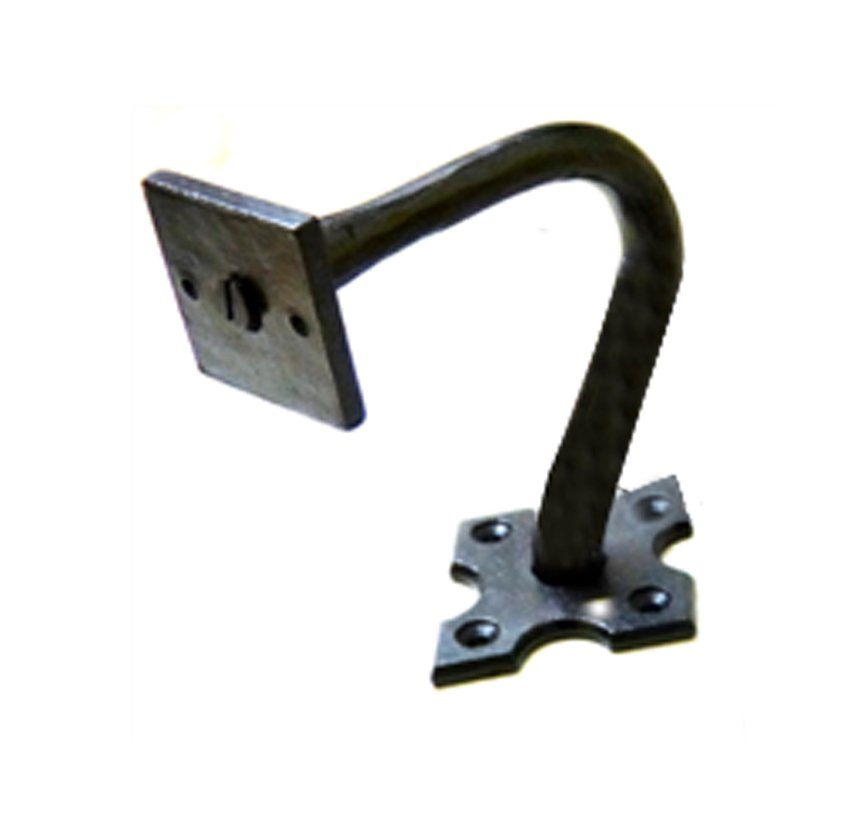
Description
A well-designed staircase needs more than an attractive handrail. The brackets holding that rail in position are an important part of the complete system. Whether the project uses a traditional wooden bannister, a round metal handrail or a contemporary wall-mounted railing, choosing suitable bannister rail brackets helps create a secure, practical and visually coordinated installation.
At Brass Hardware India, we understand that architectural hardware buyers need clear product information, reliable dimensions and fittings that suit their project requirements. We supply architectural and decorative hardware for customers who are sourcing products for residential buildings, hotels, offices, public facilities and commercial developments.
Our handrail hardware enquiries cover the selection of brackets and related fittings for different railing designs. From traditional staircase interiors to modern architectural projects, the appropriate bracket should complement the handrail while providing the connection required by the installation.
If you are sourcing handrail brackets for wooden and round rails, consider the rail profile, mounting surface, material, finish, bracket dimensions and quantity before selecting a fitting. These details help determine which bracket design is appropriate.
What Are Bannister Rail Brackets?
Bannister rail brackets are hardware fittings designed to support and connect a handrail to a wall, structural support or other compatible mounting position. They are commonly used along staircases, ramps, corridors and other areas where a fixed handrail is required.
A typical wall-mounted handrail bracket may consist of a mounting plate, a projecting support arm and a rail saddle or fixing point. The exact construction depends on the bracket design and the shape of the handrail.
The mounting plate attaches the bracket to the supporting surface, while the support arm provides separation between the rail and the wall. The saddle or connection point supports the rail and, where designed to do so, allows it to be fixed in position.
These components must work together. A bracket that looks attractive but does not match the rail shape, fixing surface or required load is not a suitable choice.
Common purposes of handrail brackets include:
- Supporting wooden and metal handrails along staircases.
- Connecting wall-mounted bannister rails to suitable structural surfaces.
- Maintaining the designed distance between a handrail and the wall.
- Helping create consistent handrail alignment along straight or sloping sections.
- Providing a coordinated hardware finish for interior or exterior architectural projects.
Brackets are only one part of a complete handrail installation. The rail itself, mounting anchors, fixing substrate, bracket positions and applicable building requirements also affect overall performance.
Handrail Brackets for Wooden and Round Rails
Not every handrail has the same shape. Some are made from solid timber with a shaped underside, while others use circular wood or metal profiles. This difference directly affects the type of support bracket required.
Choosing a compatible saddle and connection method is especially important when ordering stair rail brackets for a complete project.
Wooden Handrail Brackets
Wooden handrails remain popular in residential staircases, traditional interiors, hotels and renovation projects. Timber rails can have rectangular, oval, profiled or round sections.
A wooden handrail bracket commonly uses a flat or shaped supporting surface that can be secured to the underside of the timber rail, depending on the design.
Before selecting a bracket for a wooden bannister, check the handrail width, underside shape, fixing location and available material thickness.
The fixing screws must suit the timber and provide adequate engagement without damaging or penetrating the visible handrail surface.
Where a wooden rail has a decorative or complex underside, a standard flat saddle may not provide proper contact. A different support design or approved mounting arrangement may be needed.
The bracket finish also affects the final appearance. A traditional staircase might use a warm metal finish, while a modern timber handrail may be paired with simple black or satin-finished hardware.
The best choice balances appearance with mechanical compatibility.
Round Handrail Brackets
Round handrails are frequently found in contemporary staircases, metal railing systems, corridors and commercial projects. Their circular profile requires particular attention when selecting the bracket saddle.
Some round-rail brackets use a curved support surface designed for a specific tube diameter. Others use a separate saddle or connector.
A suitable curved saddle can improve the contact between the bracket and the rail, provided it is the correct shape and dimension.
Before ordering brackets for round handrails, identify:
- The outside diameter of the rail.
- Whether the rail is wood, stainless steel, aluminium or another material.
- Whether the rail is solid or hollow.
- The required attachment method.
- The angle of the handrail along the staircase.
- The desired wall projection and clearance.
For example, a bracket intended for a particular round tube diameter should not automatically be assumed compatible with every other diameter.
Similarly, an attachment designed for a wooden rail may not be suitable for a hollow metal tube.
For trade enquiries, providing a rail drawing or an exact cross-section is often more useful than describing the rail as simply “round.”
Types of Stair Rail Brackets and Banister Fittings
There are different kinds of handrail brackets for wall-mounted, post-mounted and architectural railing installations. Each type serves a particular purpose.
Understanding these differences makes it easier to select a suitable fitting rather than choosing by appearance alone.
Wall-Mounted Handrail Brackets
A wall bracket handrail support connects a rail to a suitable supporting wall through a bracket mounting plate.
This type is commonly used for staircases, corridors and continuous handrails along walls.
Wall-mounted designs may have visible mounting screws, concealed decorative covers or different support-arm shapes.
The wall material is important. Timber framing, masonry, reinforced concrete and other substrates require different fixing arrangements.
A bracket must be compatible with the selected anchors and installed into an appropriate load-bearing structure.
Straight Handrail Brackets
Straight handrail brackets generally use a relatively simple support arrangement suited to compatible rail designs.
They may be selected for modern interiors where a clean appearance is preferred.
However, the term “straight” does not guarantee that the bracket will suit a sloping staircase. Buyers should check the saddle angle, connection method and product drawing.
Some brackets have fixed mounting geometry, while others may provide adjustment through their design.
The correct choice depends on the actual installation.
Decorative Bannister Brackets
Decorative bannister brackets are selected when the appearance of the hardware is an important part of the staircase design.
They may feature curved arms, traditional outlines or decorative wall plates.
Such designs can complement timber staircases, heritage interiors and restoration work.
Decorative brackets still need to be evaluated for structural suitability. An ornate appearance does not establish load capacity or compatibility.
Adjustable Handrail Supports
Adjustable supports can help accommodate certain rail angles or installation conditions where a fixed bracket would not align correctly.
The available adjustment depends entirely on the product design.
Before specifying adjustable hardware, confirm the permitted adjustment range, locking arrangement and recommended use.
Adjustability should not be treated as a substitute for appropriate bracket positioning or accurate rail measurements.
Railing Hangers and Related Components
The terms railing hangers, railing brackets and banister fittings are sometimes used across overlapping hardware categories.
However, a decorative railing hanger is not necessarily intended to carry the loads associated with a safety handrail.
For architectural handrail projects, use fittings specifically suitable for the intended application and confirm their technical details before purchase.
Materials and Finishes for Bannister Rail Brackets
Material selection affects appearance, corrosion behaviour, maintenance and suitability for different environments.
Different metals can be used in architectural handrail hardware, but the available options must be confirmed for the specific bracket design.
| Material | General characteristics | Selection considerations |
| Brass | Traditional appearance, with polished or other finished looks | Confirm brass composition, coating and intended environment |
| Stainless steel | Common in contemporary metal hardware | Confirm stainless steel grade and corrosion exposure |
| Aluminium | Lightweight material used in architectural fittings | Check alloy, finish, design and required strength |
| Steel or iron | Can accommodate traditional or industrial designs | Check protective finish and corrosion requirements |
Brass Handrail Brackets
Brass is often selected for its warm metallic appearance and compatibility with classic architectural hardware.
A polished brass finish can complement traditional timber staircases, hotels and decorative interior schemes.
Other brass appearances may be achieved through different surface treatments, depending on the product.
When sourcing brass handrail fittings, check whether the item is made from solid brass, brass-plated material or another construction.
This information should be confirmed through the product specification rather than inferred from the colour.
Stainless Steel Banister Brackets
Stainless steel banister brackets are commonly considered for modern architectural interiors and railing systems.
Stainless steel can be suitable for a range of environments, but the grade and surface condition matter.
For instance, a bracket used in a dry interior may face different exposure conditions from one installed near the coast.
Stainless steel should not be described as completely corrosion-proof. Surface contamination, unsuitable cleaning products and aggressive environments can still cause problems.
For specifications involving stainless steel, buyers should confirm the exact material grade, finish and intended installation conditions.
Aluminium and Coated Metal Brackets
Aluminium brackets can offer a clean architectural appearance with relatively low material weight.
Anodized finishes are used on some aluminium hardware to modify surface characteristics and appearance.
Painted or powder-coated metal brackets may be selected for a black, white or other decorative finish.
When selecting coated hardware, check the coating specification and whether the finish is intended for interior or exterior exposure.
A surface finish cannot make an unsuitable bracket structurally appropriate for a particular installation.
Indoor and Exterior Handrail Brackets
Choosing brackets for interior staircases is not the same as specifying hardware for outdoor railings.
Interior Applications
Indoor stair handrail brackets may be used in houses, apartment buildings, offices, hotels and commercial corridors.
In these environments, buyers often consider appearance, handrail comfort, available wall clearance and maintenance requirements.
The hardware finish may be chosen to coordinate with door handles, other architectural fittings or surrounding interior materials.
Even indoors, brackets must be installed using suitable structural fixings.
Exterior Handrail Brackets
External handrail brackets and exterior handrail brackets may be exposed to rain, humidity, air pollution and changes in temperature.
Coastal environments can be particularly demanding because of airborne salts.
A suitable exterior bracket requires more than an attractive metal finish. The base material, coating, fixing screws, anchors and connection to the rail must all be considered.
Contact between different metals can also increase the risk of galvanic corrosion in certain environments.
For outdoor projects, ask for confirmation of the intended exposure conditions and an appropriate corrosion-resistant specification.
Do not assume a bracket is suitable for outdoor use solely because it is metallic or has a polished surface.
How to Choose the Right Stair Banister Fixings
Selecting stair banister fixings involves matching the bracket, handrail and supporting structure.
The following buying process is useful for residential renovations, commercial building projects and bulk architectural hardware enquiries.
Step 1: Identify the Handrail Profile
Determine whether the handrail is round, flat-bottomed, rectangular or specially shaped.
If it is round, record the actual outside diameter.
If it is timber, note the cross-section and the available area for the bracket connection.
A photograph supported by measurements can help prevent confusion.
Step 2: Check the Mounting Surface
Identify whether the bracket will attach to masonry, concrete, timber framing, a structural post or another suitable substrate.
Do not assume the same screws or anchors will work in every wall.
Wall coverings and non-structural boards may conceal the actual supporting material.
The attachment arrangement must reach an appropriate structural support and satisfy the project’s requirements.
Step 3: Confirm Wall Projection
Wall projection is the distance a bracket extends from its mounting position toward the rail.
It affects the final rail position and available hand clearance.
Buyers should also check whether the manufacturer’s stated projection is measured to the saddle, rail centreline or another reference point.
Measurements can differ between product designs.
The required clearance should be determined using applicable local building or accessibility provisions.
Step 4: Select Material and Finish
Choose a material and finish that suit the building environment and design.
For an indoor timber staircase, the finish may be selected to complement the surrounding architectural hardware.
For an exterior installation, corrosion exposure should receive greater attention.
When ordering for a building project, avoid relying only on a finish name such as satin, polished or antique. Request a finish reference or approved sample where appearance consistency matters.
Step 5: Determine the Bracket Quantity and Positions
The number of supports depends on factors such as handrail length, rail material, bracket capacity, mounting substrate, anticipated loads and applicable regulations.
A universal bracket-spacing figure cannot safely be applied to every project.
For long staircases, changes in direction, rail joints or continuous handrail sections, the support arrangement should be assessed for the complete installation.
A qualified installer or design professional should determine the appropriate fixing layout where required.
Step 6: Confirm the Complete Fixing Specification
Before ordering handrail fixings, establish whether the quoted product includes mounting screws, rail screws, anchors, covers or other accessories.
Hardware suppliers may offer these components separately.
A complete buying specification should distinguish the bracket itself from additional fixing materials.
This helps prevent delays during installation.
Handrail Bracket Installation and Mounting Considerations
A good installation begins with a clear understanding of the load path.
When someone uses a handrail, forces travel through the rail, bracket, anchors and supporting structure. Each connection must be suitable for its role.
For that reason, bracket selection should not be based solely on visual appearance or price.
Wall Fixing Considerations
A suitable hand rail mount must be connected to a structural support capable of accommodating the required forces.
The correct anchor type depends on the wall construction and applicable fixing requirements.
Mounting into unsupported plasterboard or another non-structural finish without a properly designed supporting arrangement may create an unsafe connection.
The bracket’s mounting holes, plate design and anchor positions should be checked against the supporting structure.
Rail Attachment
Different handrail materials need different attachment methods.
A timber rail may use appropriately specified screws, while a metal tube may require a compatible mechanical connection or another manufacturer-approved fixing method.
Where the rail and bracket are made from different metals, material compatibility and corrosion protection may also need consideration.
The connection should be selected according to the specific components rather than improvised during installation.
Alignment and Hand Clearance
Handrail alignment influences both appearance and usability.
The support arrangement should maintain the intended rail position along the staircase or walkway without creating unexpected obstructions.
Hand clearance, rail height and continuity may be governed by local building requirements.
International projects should not automatically apply one country’s dimensional guidance to every destination.
Inspection and Maintenance
Handrail hardware may need periodic inspection, particularly in heavily used environments.
Building owners or maintenance teams should follow the manufacturer’s recommendations and check for visible movement, corrosion, deterioration or damage.
Any concerns about the stability of a safety handrail should be assessed by an appropriate professional before continued use.
Common Mistakes When Buying Banister Rail Brackets
A small purchasing error can affect the appearance, compatibility or installation schedule of a complete staircase project.
Understanding the most common mistakes helps buyers prepare better specifications.
Choosing by appearance alone: A decorative bracket may not suit the rail dimensions or required installation conditions. Confirm mechanical compatibility before approving the design.
Ignoring the rail shape: A support intended for a flat timber rail may not correctly fit a round metal tube. The saddle geometry should match the rail.
Assuming all brackets have the same projection: Bracket dimensions vary. Confirm the actual projection and measurement reference before purchase.
Using unsuitable fixing hardware: Even an appropriately selected bracket depends on its connection to a suitable supporting structure. Anchors and screws must be specified for the installation.
Overlooking exterior conditions: A bracket suitable for dry indoor use is not automatically suitable for exposed outdoor conditions.
Ordering mixed finishes without approval: Different manufacturing batches or finishes may not have identical appearances. Trade buyers should confirm samples and finish references where required.
Not confirming the supplied components: Screws, anchors, covers and rail connectors may not be included with every bracket.
Treating all handrail brackets as interchangeable: Hardware made for decorative railing applications may have different requirements from hardware used for functional safety handrails.
A detailed enquiry helps address these issues before procurement.
Applications for Residential and Commercial Projects
Handrail brackets are used in many types of architectural settings. The appropriate hardware depends on the particular project, the installation environment and any applicable performance requirements.
Residential Staircases
In homes, wall-mounted brackets can support compatible timber or metal handrails along enclosed stairways and landing areas.
Buyers may prefer decorative finishes for traditional interiors or understated designs for modern spaces.
Hotels and Hospitality Interiors
Hotels and other hospitality buildings often combine functional architectural hardware with a coordinated interior design.
Handrail bracket selection may need to consider regular use, maintenance, finish consistency and the building’s safety requirements.
Offices and Commercial Properties
Commercial staircases and corridors may require durable handrail systems with consistent appearance across multiple areas.
Project buyers should document rail specifications, fixing arrangements and relevant performance requirements before placing bulk orders.
Renovation and Restoration
Replacing older bannister brackets can be more complicated than fitting hardware to a new staircase.
Existing mounting positions, rail profiles and wall conditions may not match current products.
For restoration work, drawings, dimensions and photographs can help identify a suitable replacement or alternative arrangement.
Ramps and Accessible Routes
Handrails on ramps and accessible routes may have specific requirements for height, continuity, gripping surface and clearances.
The bracket arrangement must not compromise these requirements.
Applicable accessibility and building regulations should be checked for the project location.
Outdoor Steps and Walkways
Exterior handrails may be required along entrance steps, ramps and other outdoor circulation routes.
For such installations, attention should be given to weather exposure, suitable materials, structural anchorage and long-term maintenance.
A qualified project professional should confirm the complete design where safety or regulatory compliance is involved.
Bannister Rail Brackets for International Trade and Project Enquiries
Brass Hardware India supplies architectural and decorative hardware to buyers seeking products for different building and interior applications.
For international procurement, bannister rail brackets should be specified using clear technical information rather than product names alone.
Buyers in Asia, South Africa, the United States and other markets may use different measurement conventions or building requirements. Providing accurate dimensions in millimetres, with inch equivalents where needed, can help avoid misunderstandings.
A supplier enquiry should ideally include the bracket design, product reference if available, desired material, surface finish, rail compatibility, wall projection, intended use and quantity.
When requirements involve project-specific finishes or drawings, these should be discussed before assuming a catalogue item will meet the specification.
Information to Include in Your Quotation Request
For a more accurate hardware enquiry, send:
- Product reference or bracket image: Identify the design you require.
- Rail type: Specify round, wooden, flat-bottomed or another profile.
- Dimensions: Include rail diameter, bracket projection and mounting measurements.
- Material: State the required metal or request available options.
- Finish: Describe the finish or provide an approved reference sample.
- Application: Explain whether the installation is indoors, outdoors, residential or commercial.
- Order quantity: State the number of pieces required and any repeat-order expectations.
- Destination: Provide the receiving country and delivery location.
- Project requirements: Attach technical drawings or applicable performance requirements where available.
For international orders, buyers should also confirm packing requirements, commercial terms, delivery arrangements and any necessary product documentation.
These points help keep the discussion focused on a bracket that suits the actual project.
Why Source Architectural Hardware from Brass Hardware India?
Brass Hardware India presents a broad architectural and decorative hardware catalogue for domestic and international customers.
Our product range spans different hardware categories, including railing hardware and related building fittings.
For importers, wholesalers, contractors and other project buyers, sourcing decisions depend on more than identifying an attractive bracket.
The correct design, dimensions, material, finish and fixing compatibility all matter.
We welcome enquiries that provide these details so the relevant product options, specifications and commercial requirements can be discussed.
If you are purchasing fittings for more than one project, supplying consistent product references and finish requirements can also help establish clearer future ordering specifications.
For specific bracket models, always request confirmation of material, available finish, minimum order quantity and relevant technical information.
Request a Quotation for Handrail Brackets and Stair Banister Fixings
Whether you are sourcing fittings for a wooden staircase, a modern round handrail or a commercial building project, selecting suitable hardware starts with a complete specification.
At Brass Hardware India, we welcome product and trade enquiries for architectural hardware requirements.
Looking for bannister rail brackets, stair banister fixings or related handrail hardware?
Send us your required bracket design, rail dimensions, material preferences, finish, quantity and destination to discuss suitable product options and quotation details.
Explore our architectural hardware catalogue or contact Brass Hardware India with your project requirements.
A carefully selected bracket is more than a decorative detail. It is part of a complete handrail system where correct fit, secure mounting and appropriate material selection are essential.
Frequently Asked Questions About Bannister Rail Brackets
1. What are bannister rail brackets used for?
Bannister rail brackets are fittings used to support handrails along staircases, corridors, ramps and other suitable locations. They connect a compatible handrail to a supporting wall or structure. The bracket type, mounting method and fixing hardware must be selected according to the rail design and installation requirements.
2. Can the same handrail brackets be used for wooden and round rails?
Not all handrail brackets are interchangeable. Wooden rails may require flat or shaped saddles, while round rails often need curved supports or compatible connectors. Before selecting a bracket, confirm the handrail profile, dimensions, material and approved attachment method.
3. Which material is suitable for stair banister fixings?
Brass, stainless steel, aluminium and coated steel are among the materials used for architectural handrail fittings. The appropriate choice depends on the environment, required performance, design and maintenance considerations. Always confirm the material specification of the particular product before ordering.
4. Can bannister rail brackets be installed outdoors?
Some bracket designs are suitable for exterior applications when their materials, finishes and fixing systems are appropriate for the environment. Outdoor installations may be exposed to rain, humidity and coastal conditions. Confirm the corrosion specification and intended use before selecting exterior handrail brackets.
5. How many brackets are needed for a stair handrail?
The required number of brackets depends on the handrail length, rail construction, bracket capacity, supporting wall, anticipated loads and applicable building regulations. There is no universal spacing suitable for every handrail system. Use the manufacturer’s installation requirements and obtain professional design guidance where necessary.
6. What details should I provide when requesting a bulk quotation?
For a bulk enquiry, share the bracket design or product reference, required quantity, material, finish, rail profile, dimensions, mounting requirements and delivery destination. Technical drawings or photographs can also help clarify the specification. Brass Hardware India can then discuss relevant product options and commercial details.

Reviews
There are no reviews yet.